Aspiring NY mayors to tech companies: Do more for city, middle class

IMG_0941

By Dennis Clemente

How would you like New York to be Monaco where only the richest of the rich can afford it? Trust our politicians to have a flair for the dramatic. The reference is coming from former congressman Anthony Weiner who thinks that the city is facing a challenge (dwindling middle class jobs) as much as an opportunity (growing tech industry) for being the second tech capital of the United States.

He welcomes the 10,000 tech jobs gained but decries the diminishing job opportunities for the middle class. “We’ve been eliminating middle class jobs and backfilling them with restaurant and tourism jobs.”

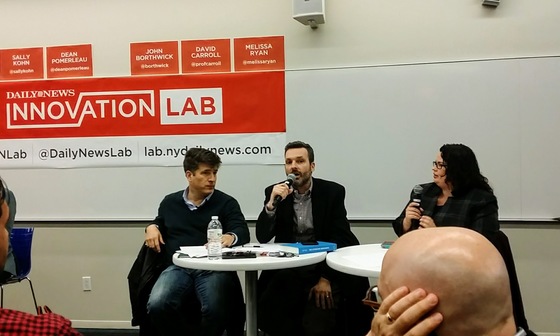
Weiner was speaking at the Mayoral Candidates Tech Policy Forum at the Museum of Moving Image last June 17, along with other confirmed mayoral candidates– former NYC Councilmember Sal Albanese, former Bronx Borough President Adolfo Carrion, Jr. and NYC Comptroller John Liu.

The candidates were a study in contrasting styles. Where Weiner and Liu were bold and audacious, the two other candidates, Carrion and Albanese, favored caution and discreetness.

For Weiner, “New York has to remain a magnet for the middle class, because they are the DNA of the city whose success hinges on the three-legged middle-class aspirational stool—being able to afford a place; having some decent public education and getting a steady job with benefits.” Without one leg, the middle class is bound to suffer. Nobody likes to be Monaco.

Speaking for the average middle class, Liu cited how the city is already “facing an aging infrastructure and how it’s made worse by monopolistic systems of big telecommunications companies and Internet service providers who are not holding their end of the bargain.”

He showed his displeasure about how companies can’t even provide the essentials. He said not enough neighborhoods are connected and that there are still dead spots. “We should hold big companies to a higher level of accountability. (If not), the city has to be the enforcer.”

Nilay Patel, the moderator who also writes for The Verge, laid down the tech companies’ most pressing concerns about the city, those who fought or are still fighting some regulations—Aereo with its streaming TV service, uber with its cab-calling app and AirBnb with its short stay rentals.

It was Weiner who responded boldly. “I don’t think uber will ever be a success in New York City. We have a system in place for dispatch cabs, yellow cabs and black cabs. You can argue with the structure. But it has worked very well for the city, in keeping the quality of our rides.”

He added, “It’s (app) a false choice, when somebody could get a ride because he has an app and bypass other people who, not having the app, is left standing in a corner (waiting for a cab). A tech company should not undermine laws so as to protect consumers.”

Patel’s rejoinder: “I hope you reconsider your answer next time you’re looking for a cab in the rain.”

As for AirBnb, Carrion thinks detailed SROs (single room occupancy laws) just need to be followed. “I believe it (AirBnb) will be good for us. It will be good for tourism. It’s expensive to go to New York City. We just need to revisit rules, our land-use policies, and make sure we don’t disrupt neighborhoods.”

In principle, Liu agreed with both Weiner and Carrion. “If you’re making a profit from your business model based on innovation, that’s great. But if you’re skirting regulations that other legitimate businesses have to follow, then that’s not a great thing.”

Carrion puts it simply, “Are you a developer or (job) creator? Are you adding value?”

The forum ran also discussed the need to address STEM (science technology engineering math) education, including teachers of computer science, and a rethinking of zoning laws as well as tech infrastructure. Albanese said residents in Williamsburg have asked him to run their businesses there. Liu said millions of dollars are being poured in a tech school in Long Island City where it thinks the City University of New York should also get some support.

Joel Natividad, founder of open data company, Ontodia, wished the candidates also talked about open government but there was simply no more time.

The forum was organized by the Coalition for Queens with Anjali Athavaley of the Wall Street Journal as the other moderator.

The mayoral candidates draw first blood.

Indie game developers use cross-promotion, sponsored content to compete

IMG_0931

IMG_0932

By Dennis Clemente

Gaming is the largest business on smartphones and tablets, but how are small indie game companies competing out there? At the meetup called “TechHubNYC: Indie Games for the Win,” hosted by Yannis Dosios of Flurry recently, the guests do a little of everything—cross-promotions, video ads, sponsored content, as they work with various ad agencies to keep themselves solvent while staying true to their roots.

It was far from being an organized meetup (it started over an hour late, for one), but the audience didn’t mind as they waited patiently to hear from the two companies in gaming–Arkadium, Inc led by Neal Sinno and Patrick Morgen of the famed Dots game representing Betaworks with special guest Dan Yashiva of Musicsoft Arts.

The panel talked in varying degrees about the way they develop, self-publish and market their apps efficiently. Without mentioning big companies catching on to this lucrative business, each speaker recounted how they go about their quest for gameplay innovation, better measurement tools, low-cost acquisitions and high-efficiency monetization while also addressing the challenge of rising competition and costs.

Asked about the challenges they face, the three speakers pointed to the Android platform for the different sizes, but all agree that Kindle, because of Amazon’s huge retail coverage, shows promise.

Among the three guest speakers, Patrick Moberg, Betaworks’ hacker in residence, chooses to be the quiet one, preferring his mobile game, Dots, speak for itself, as he frequently passed on the mike to the other speakers. Dots has been voted one of the top 10 best indie games, clearly a big thing for Betaworks’ first mobile game.

Available only for the iPhone, Dots is a simple grid game: You connect the dots that are of the same color with a straight line, dots disappear and are replaced by more dots. You repeat until the clock runs out after 1 minute.

Moberg didn’t initially set out to make a game, but when he did Dots, he knew it should be simple to understand.

The next presenter, Arkadium, is not exactly “indie” the way it has succeeded since its inception 12 years ago as a bootstrapped company. Today, it is a leading casual games developer with a library of over 300 free online casual games in different platforms—plus $5 million in funding from Edison Ventures.

The New York-based company’s biggest hits are Microsoft Solitaire Collection and Mahjongg Dimensions Blast. It also makes games targeted at the cross-platform Windows environment while maintaining Facebook games and mobile games. Every month, 10 million people play its games.

In his experience, Sinno said it’s better to have ads come early in your app rather than later when people are already used to playing your games without seeing ads. “You don’t want to disappoint your fans.”

Asked how they market their games, Sinno said, “We talk with (ad) agencies. We do micro transactions. We do cross-promotion.”

Dan Yashiv, partner of Musicsoft Arts, also believes in cross-promotion. He has reportedly secured deals with major sponsors, including Toyota, Hennessy, Bacardi and Hyundai, top DJs and artists such as Carl Cox and Thievery Corporation, media hub VIBE Magazine, and music aggregators The Orchard and InGrooves.

Yashiv is a seasoned media entrepreneur who thinks advertising is a different skill set nevertheless. For the uninitiated, he said, “it’s also about knowing the right people.”

He co-creates and co-develops groundbreaking music apps. To date, he said Musicsoft apps have been downloaded in over 16 million mobile device users worldwide. Like Arkadium, Musicsoft is bootstrapped and a “5% app developer.”

Like Arkadium, Musicsoft is a New York-based company. However, his business is not exactly gaming but mobile music. An audience reminded him of that by saying, “you’re not in gaming, right?” which he deflected well by agreeing and talking about how he works with experienced software developers along with new media producers and music professionals, and how it is focused on building hi-fi music mobile apps.

Audiophile is one Musicsoft app for picky ears. Along with left and right channel decibel output displays, mini-player, as well as a full music library browser and playlist manager, Audiophile includes three enhancement toolkits for precise sound tuning and improvement. One of the most common tools, the standard equalizer is available in a 10-band configuration or a simplified three level setup with low, mid, and high adjustments.

A secondary EQ, which utilizes MaxxAudio technology, boosts the frequencies and volume beyond the audio file’s encoding, plus offers an automatic leveler and overall booster similar to Apple’s Sound Check feature.

For the third choice, you can optimize the output based on the speakers, whether
headphones, self-powered external units, or the iPad’s own audio system. The Maxx features can be tested using a limited duration demo mode, and are available to permanently unlock for $0.99 (currently on sale) via in-app purchase.

Flurry TechHub Meetups are monthly, free-to-attend events that bring together high-caliber developers, founders, entrepreneurs and investors in the technology community. Flurry TechHub Meetups are held across the world’s top tech centers including San Francisco, New York, Toronto, and Los Angeles.

Is crowdfunding right for you? Tales from the trenches

By Dennis Clemente

Is crowdfunding right for you? For some people, the thought of sharing their business idea online to get funding is like giving it away but not unless your idea gets funded faster. Maybe you’re not comfortable with the idea of getting in front of a camera, but there’s a way to overcome that, too.

At the meetup “In the Trenches: Best Practices for Crowdfunding” at a Microsoft office last June 4, the panel of speakers came from gamers who went through crowdfunding and lived to tell the tale. They were Melissa Marie Fassetta of FPS Russia, Joshua DeBonis of Meriweather and Mark McCorkle of Luna Nova.

There was no hesitation on Fassetta’s part. She said she went to Kickstarter right way with her idea. That proved to be a good move, as she helped raise $55,000 to fund FPS Russia: The Game http://www.kickstarter.com/projects/fpsrussia/fps-russia-the-game-0, coordinating with the popular YouTube channel http://www.youtube.com/user/FPSRussia. Fassetta is a game development and social media project manager for a digital creative agency in NYC.

She has also been involved in a Kickstarter project that was not funded, and is happy to share her experience in what works (and what doesn’t) in running a successful Kickstarter campaign. “Set a lower money level. We set it at $51,000. We got $55,000.”

Reaching that amount is not as easy. “Kickstarter is powerful but you can’t just rely on it. Have writers or bloggers write about you,” she said with others nodding in agreement. DeBonis ran a successful Kickstarter for a computer role-playing game about the Lewis and Clark Expedition called Meriwether http://www.kickstarter.com/projects/meriwether/meriwether-an-american-epic.

“We talked about our game using Google Hangout and did cross-promotions with others seeking funds on Kickstarter,” DeBonis said, who is particularly interested in exploring ways to integrate history and music with games, the procedural generation of game content, and games that provide a deep experience. DeBonis raised $35,000, still way less than the cost of the game but it’s a good start. As of press time, he has raised over $44,000.

It helps if you have the credentials for people to believe in you. DeBonis is an award-winning game designer and the Director of Sortasoft LLC, an independent studio based in Brooklyn, NY. He has taught game design and development at Parsons The New School for Design, is co-founder and organizer of the New York Board Game Designers playtest group, and recently co-founded the experimental collective Brooklyn Game Ensemble.

Over the past year, McCorkle has been working on various browser and cross-platform technologies, finally settling on a framework that will allow his game, “Luna Nova,” to reach as many platforms and players as possible.

The purpose of building the game is not just to entertain, but also to give McCorkle and the other creative people on his team a venue to communicate a rich sci-fi story. Kickstarter will allow him to get his indie game into people’s hands by winter of 2013.

Since this is McCorkle’s second Kickstarter campaign, he gives one great tip about how to use your Facebook log-in. “Create a Facebook page specific to your crowdfunding campaign, so when you need people to promote or collaborate with you, it’s easier.”

“This is my second Kickstarter project,” the animated McCorkle said. He started his game geek life writing small games on his Atari 800XL. After years of being a game consumer and building infrastructure for everything from ISPs to travel companies, he worked with a small team to develop a browser-based MMO.

The panel was moderated by Emma Larkins who works for a tech startup called Knodes that helps people build communities around their projects. She’s passionate about the crowdfunding industry, and recently Kickstarted her first science fiction novel, Mechalarum http://www.kickstarter.com/projects/emmalarkins/mechalarum-a-science-fiction-novel.

For people to consider funding your idea, handing out rewards or incentives is also important, but
what’s even more important is to know how to handle it without making it a bigger headache than your idea.

The panel said a physical item/reward can be problematic. It can be a pain to ship a thousand items plus you have to deal with customs. They also advised that you make sure you know where you are shipping your item—domestically or internationally.

As a crowdfunding site, not everybody gave Kickstarter a resounding endorsement. The panel offered some suggestions (and misgivings) on how the site has still room for improvement:

• Writing and editing fields could be improved (no copy-paste option)
• Fortunately, there is a preview mode now
• No interaction during and after posting with Kickstarter
• When the campaign ends, you can’t edit your posting anymore
• It has no data unlike Indiegogo, so you don’t know who’s clicking on your posting
• Indiegogo has no transaction fees
• You don’t need approval on Indiegogo

The more important benefit of crowdfunding is building a rich community of people who want you to succeed. But is crowdfunding for everyone? The panel was unanimous in saying some ideas “just have no audience,” with McCorkle adding that “if you failed the first time, it’s harder the second time.”

To raise your level of success, the panel was unanimous in saying that having a well-scripted video is essential. In the beginning, they admitted to trying an off-the-cuff, impromptu video to appear authentic, but it didn’t work.

Still, the question remains: Is there a full-proof way of getting your idea funded? You’ll learn from first-hand experience.

AOL Ventures’ mobile app demos go 3D and 4D

SPUN for iPhone. Great News. from SPUN on Vimeo.

By Dennis Clemente

Would you rather play Candy Crush or make one just as successful? Last May 28, AOL Ventures played host to a diverse mix of mobile apps that show you how to create a business plan, bank in a snap, track consumer behavior, provide enterprise solutions and experience 3D and 4D all in an app.

Problemio founder Alex Genadinik showed how his business plan app works, including how it can be used as collaboration tool. Being highly ranked on iTunes with over 150,000 downloads, many people clearly want to own their business someday. The app is also available on Android.

Now if you want to enable your business for mobile, Art Chang’s AppOrchard is going to talk to you about his team of iOS insiders and former Apple and NeXT software engineers and their background in producing mobile systems across the finance, retail, media, healthcare, education and other industries.

Chang said AppOrchard digs deep into an organization to understand business models to create premium enterprise apps.

Not all tech startups focus online. Nomi is offering a service that tracks consumer behavior across online channels and in physical stores.

Nomi has strong backing from several venture capitalists. This year, it reportedly raised $3 million in seed funding in a round led by First Round Capital, with Greycroft Partners, SV Angel, Forerunner Ventures, among others.

Founded by Salesforce and Buddy Media, Nomi provides retailers with a mobile analytics and engagement platform which integrates existing CRM, loyalty and e-commerce platforms. In physical stores, however, Wesley Barrow said it can only pull in data from Wi-Fi-enabled phones.

Another app presenter, Refundo, seems unbridled for a company that focuses on compliant-reliant financial services. Demonstrating the app, Refundo’s CEO Roger Chinchilla showed how anyone can open an FDIC-insured bank account from their mobile phone—under a minute.

“We are targeting the unbanked and there are 68 million of them,” he said. “We are also KYC (Know Your Customer)-compliant.”

KYC refers to due diligence activities that financial institutions and other regulated companies must perform to ascertain relevant information for their clients for the purpose of doing business with them.

Launched this year, Chinchilla said you can also access thousands of ATMs and cash deposit locations nationwide, and equips bank customers with a personalized Refundo debit Mastercard. For the cash deposits, he has partnered with Western Union nationwide. You can also choose to load money by scanning another card.

On the safety of the app, he said its 100% encrypted. “We get your routing and account numbers. We don’t store sensitive information.”

One app that does store information—and lots of it is SPUN, a news site that targets the best articles from thousands of users based on who they are, where they are, and what they like.

“We have an editorial team as consultants,” founder Scott Lindenbaum said.

How is it different from any other news aggregation site? Lindenbam demonstrated by a quick turn, how the top stories appear in a 3D cube. The stories show a virtual revolving cube with sound effects.

The news categories include Top Stories, Lifestyle, Entertainment. You can expect to see stories from the Business Insider, Bloomberg, Huffington Post, CNN, BuzzFeed, Consumerist, Betabeat, and many more.

If SPUN is 3D, Moveable is 4D or so it seems for founder Steve Schultz, the last presenter of the night. The name was inspired from the book by Ernest Hemingway, “Moveable Feast.”

Schultz described his app 4D for the immersive experience of his app where you blend maps, sounds, images and stories to create your own multimedia world. “Moveable immerses you in locations.”

For the artistic, Schultz said Moveable converts you to a storyteller, a traveler, a filmmaker, a journalist, even an explorer. The curated paths, he said, follow you forever as you can share the experience with just a few taps.

Early stage startups present their companies under the scrutiny, guidance of VCs

By Dennis Clemente

Where startups in New York go by the numbers of introducing new products or services to a curious, relaxed audience, the startups that present at the Hatchery events face perhaps what no other meetups offer—the scrutiny of venture capitalists (VCs). In both cases last May 22 at Chadbourne & Parke, LLP, the audience saw how the pitching process works and how VCs give feedback to early stage startups.

With some having not much presence online being in the early stage of their business, the VCs dissected their business model, assessed their presentation skills, asked financial questions and most important, gave essential tips.

The presenters were Bespoke Social Media, Pretty In My Pocket, Sentometer, and Unbound. The VCs were Peg Jackson of Gridley & Co, Warren Haber of Exoventure, Josh Bruno of Bain Capital and Bill Reinisch of Paladin Capital.

Pretty In My Pocket (PRIMP) and Unbound are aimed at the female market—the former offers perks in primping, the latter gives you orgasm in a box.

PRIMP CEO and Founder Caroline vin Sickle said the idea came to her when she went to a popular pharmacy store and couldn’t open the beauty products. “We’ve all made lots of “oops” purchases over the years.”

Raising $1.5 million in funding, PRIMP is a mobile shopping solution for beauty products during in-store shopping experiences. With a quick mobile bar-code scan, its selection engine provides product look-ups, social recommendations, and location-based incentives.

“Our goal is to help women find the products they need at the most critical time—in the aisle. We help them choose products based on preferences and personal beauty needs,” she said of the $50 million beauty industry.

Raising $500,000 in capital, Unbound is looking at subscription and affiliate sales in what the three female founders think is going to be a $25 billion erotic products industry in the foreseeable future.

The founders call themselves Greer, “product goddess,” Sarah Jayne, “content czar,” and Katie, “minister of design” and one of them handed out a free box worth $60 to the only female VC in the panel, Peg who smiled mischievously as she accepted the gift.

What’s in the box? They contain “several tested and adored products, inspiring erotica, thoughtful guidance and extra swag.”

The other presenters were tame in comparison.

Bespoke Social Media Atelier is going the Pinterest route but with privacy in mind. “Ours is a tool for creatives to curate, organize and present content that is kept private or shared with small groups,” said Michele Spiezia, founder and CEO.

Bespoke has two main elements: the Inspiration Stream and Inspiration Books. Users can add their social media streams (Twitter, Facebook, Instagram, Tumblr) and any RSS feeds they follow to their Inspiration Stream for a real-time, visual flow of content. Content can then be saved to Inspiration Books, which users can share with friends or keep private.

Spiezia said Bespoke recently partnered with Evernote, but she is still seeking $750,000 in funding, as she also estimates profit to come in by 2014.

Sentometer, for its part, is a tool for measuring and monitoring conversations in the social media universe.

Founder Mike Kelly has set up appointments with ad agencies to offer his social media tool. He likes to think of it as “taking the pulse” of a topic and letting people know when it speeds up. “We have the social aspect in cruise control.”

Some of the feedback from VCs included these gems:
• It doesn’t mean you can start a company you should
• Biggest variable is not time, it’s the market
• If you are not #1 or #2 you will not be able to stay around. Figure out how you can be #1 in the market. No one wants #3
• Credibility (when first presenting) is very important
• Have a backup Powerpoint slide (if you need to show more)
• Make sure you understand your market

Organized by Yao-Hui Huang, the Hatchery helps build communities of entrepreneurs and investors.

What makes a great leader? Try asking your team how you could fail

By Dennis Clemente

As a leader, do you think you could you ask your team this—“Tell me all the things that could go wrong?”—and expect to get real answers?

That startling question, from the best-seller, “Decisive,” by Chip and Dan Heath and asked at the meetup, pretty much summed up what the NY Intrapreneur meetup in the Upper East Side last May 14 had in store for its audience–transparency among the panel of speakers.

So many tech meetups these days are all about pitching, showcasing us great works that come from creating products that promise to make all our lives easier. In this meetup founded by Debbie Madden, also a CEO at Cyrus Innovation, the panel of guests from Coach, Ogilvy & Mather, Simon & Schuster and
Kaplan Test Prep showed how they are willing to be candid.

They talked about work and the disruptions, ugly or not, that occur in collaborations, in how we organize ourselves, motivate one another and combine talents to meet challenges. So where other events shun sensitive questions, this meetup was open, incisive, and even conspiratorial.

For example, it may be surprising to hear people say, “I have ‘self-interests’. I want to work with the same team. That’s the fight I will fight,” but coming from the affable and reflective Ken Judy, VP Technology of Simon & Schuster Digital, you know it’s a normal rational response.

NY Intrapreneur's panel of speakers

NY Intrapreneur’s panel of speakers

But you know there’s a certain grain of truth in that statement. Indeed, working with the same team who trust its leader as much as its members has some advantages—it saves time and effort, because Judy declared, “No one gives trust; it could take a year or more,” as he emphasized the gravity of what we face in any new project, distrust.

Judy was at one time executive manager and software developer who managed development and product at Oxygen Media (NBC-Universal), and was a product manager and agile coach at NYSE Euronext Advanced Trading Solutions.

As the moderator, Madden set the analytical tone of the meetup with questions that allowed the leaders to discuss their role as their company’s intrapreneur.

For entrepreneurial ideas to take off, Ilio Krumins-Beens, executive director, Agile Practices at Kaplan Test Prep said it’s important for the disconnected software and business team to connect, if it means changing processes. I spend time using agile technology with key influencers.”

Krumins-Beens has been working with teams to deliver software and web applications for over 15 years in a range of industries–government, media, tech startup, and education. He is a passionate agilist who has presented at several Agile/Lean conferences since 2007.

For the two women in the panel, time is key.

For Kathleen Gareiss, managing director of Digital Delivery at Ogilvy & Mather, having a timeline (to follow) is crucial, because “ideation can take long.”

Danielle Schmelkin, VP-Business Intelligence and Data Management at Coach, agreed. “Time is always a factor,” elaborating on how meeting deadlines is always a challenge. She is a proponent of “passion (being) one ingredient and relationship is another” to entrepreneurial success.

Gareiss is a digital native with more than 15 years of experience working in the interactive industry. The focus of her interactive career has been on producing new, large-scale platforms and global implementations. She works within a company to standardize and “operationalize” the processes needed to deliver these digital experiences.

“The outcome of the day is important for me,” Gareiss declared.

Schmelkin, for her part, is responsible for all of the technologies associated with transforming data into critical business information. Prior to joining Coach, Shemlkin held key positions at Barnes & Noble, Inc., where she was most recently VP of Business Intelligence, responsible for creating and implementing a business intelligence platform for the entire enterprise. She was also CTO during the launch of the nook, Barnes & Noble’s digital reading platform.

“We should always work toward a goal,” Schmelkin said. “Guide the company where they can go or not. (But know) there are concepts they will not be ready for.”

Answering that, Judy said, “You have to throw (some) ideas away. Not all ideas can be (executed).”

As a parting shot, each one offered their set of beliefs about what someone just starting can bring to the company they work for.

Gareiss answered first, saying good “writing” tops her list, as well as “being a sponge all the time.” Shemelkin thinks demonstrated “leadership and communication skills” are vital.

Krumins-Beens, for his part, said it’s important to “trust your idea and to not let anyone dissuade you when you get a ‘no.’ You don’t want a string of jobs. You want a career. ”

Judy said with a crack in his voice, “Don’t take too much for yourself, though. Routinely collaborate. Work hard with humility.”

The meetup was organized by Madden, who founded NY Intrapreneur in 2012 to enable rich conversations about innovation within the NYC tech community. She is also speaks and writes on enterprise and startup trends.

Fitbark app for dogs: Woof of things to come

Wearable tech for dogs

Wearable tech for dogs

By Dennis Clemente

At the “TiE New York: Fostering Entrepreneurship Globally” meetup last May 8 in midtown Park Avenue, Fitbark launched a tiny wearable contraption that helps owners monitor the activity of their dogs, with the resulting data captured, stored and viewable on any iOS devices. It’s an app for dogs briefly mentioned in the previous post, so to provide more detail, here is Michael Chiang, “Woof Interpeter,” giving us more than a whiff or, woof, of things to come.

How did you guys come up with the idea?
We started FitBark about a year ago as a fun project to check up on our dog Freud and my Dad, if he was really walking him. We looked around to see if anything existed that gave us a real-time view into Freud’s safety, health and happiness and didn’t find a compelling product for dog owners to stay connected with their dogs.

So when we designed FitBark, our goal was to feel connected with our pets at all times, rather than attempt to reconnect with them only after they get lost. This is why we designed FitBark’s experience to be seamless (no manual inputs required), dynamic and that has use throughout the day. We love to be able to check on our dogs and get insights into their life as much as we like – even if we’re out of town!

How did you get funded?
We have been bootstrapping, but will start looking for outside funding soon.
We are also in the midst of a Kickstarter campaign where new customers are pre-ordering the product by the day. Here’s a link to our Kickstarter page -> fitbark.com/kickstarter

What makes your product stand out?
FitBark is being built from the ground up to cater to the needs of dog owners and other caretakers. With this laser focus, our goal is to contribute to a great pet parenting experience, which begins with keeping in touch with our dogs, and getting insights about how they feel by looking at their energy levels. We live by the saying that “a healthy dog is a happy dog”.

Who are your competitors?
No direct competitors. Among the GPS collar manufacturers, TAGG has recently added physical activity tracking. We also view the GPS collars as a complementary market. Here’s the blurb from its Kickstarter page:

Why don’t you have a GPS on it?
We familiarized ourselves with a number of GPS products, and we found that they were too bulky and heavy for our dogs. It would have also greatly reduced battery life.

See how Fitbark works. Visit http://www.fitbark.com/

Wearable tech for your dog, the ‘march of penguins’ to help you raise capital

By Dennis Clemente

What do dogs and penguins have in common? They were the topic of two presenters at the “TiE New York: Fostering Entrepreneurship Globally” meetup last May 8 at the Loeb & Loeb in midtown Park Avenue. The two presenters were Fitbark for dogs and DreamIt Ventures’ Arie Abecassis who explained why you need the concept of the march of penguins to raise capital for your startup.

Fitbark launched what it billed dog parenting 2:0, a tiny wearable contraption that helps owners monitor the activity of their dogs, with the resulting data captured, stored and viewable on any iOS devices. It claims to give real-time insights about their pet’s activity and energy level. Pre-orders are now available.

From that presentation, the meetup sequed into how to raise capital for your business idea—and yes, it does have something to do with the march of penguins.

“It’ s a world of lots of ‘maybes’ and few ‘no’s’. So the trick is how to get the ‘maybes’ to say ‘yes,’”” Abecassis said. “You wait for the first penguin to jump into the water. Once that happens, the rest (of them) just jumps in.”

“It’s a similar phenomenon with investors. When investors perceive their risks are mitigated, they’ll jump right in,” he added.

Attendees at TiE meetup

Attendees at TiE meetup

Abecassis acknowledged what everyone knows to be true. “It’s not about what you know but who you know. It definitely helps to get to the right people, but it’s important that the relationship builds up. If you’re planning to raise money next month, it’s too late to pitch to VCs.

“Build the relationship by sharing your progress. And as you progress and update them, you will notice the conversation changing, especially when they see you’re comfortable in the positioning of your product. They’ll see how you are demonstrating the job you are supposed to do.”

“It’s especially important to tell them (VCs) why they’re a fit, why it’s a good opportunity for them and why they can help,” he said.

For him, making a connection with a VC is about connecting the dots. He almost singled out LinkedIn but later in his talk, he mentioned other social networks and for those running in the same circles, he said find out if you went to the same school.

On crowdfunding, he said it is “probably the single most exciting development in the world of entrepreneurship right now, because it holds so much potential to unleash millions of dollars or capital into the startup space.”

It was refreshing to hear him acknowledge how Kickstarter and Indiegogo have a strong foothold in this regard without mentioning his company, AppStori, which does the same in principle but only skewed to apps.

These platforms are being developed to open investor opportunities. “In 2014, the average American household may not need to meet stringent criteria to invest in a startup. That’s going to open up a ton of capital,” he said.

“This could raise the bar for VCs, but all good for the entrepreneur,” he added.

When it comes to raising capital from VCs, addressing those non-binding term sheets are crucial, as it establishes the valuation and terms of an investment and basically reflects the economics and control for capital and guidance.

“For those just starting their business, the good news is that VCs have become entrepreneur-friendly and less aggressive on some terms,” he said. “Besides, there are other ways for companies to assign value to itself.”

He advised the startup, though, that it’s not always about going for the highest bidder. “Value what investors are bringing to the table.”

Abecassis also talked about the aspect of governance in a startup, which covers board size, its composition, protective provisions and the roles of directors and observers, even the role of an independent, to the business. Governance should improve investor returns, he said.

How does one make use of the raised capital? Abecassis suggested the following: build product or service; build sales; expand marketing channels and take care of operations like legal and accounting work.

“You have the ability to use the Internet as your infrastructure,” he said. He doesn’t need to tell us what should follow next is customer acquisition.

WeHostels, Tracks report increased app downloads, Uber NYC shorter wait

By Dennis Clemente

The Queens Tech Meetup on Hunters’ Point Plaza in Long Island City may just have the most scenic view of Manhattan’s skyscrapers in Queens. It’s already unique for being out of Silicon Alley’s neighborhood, but if you think about it, the venue fits tech startup founders. It’s nestled on a rooftop like how startup companies featured here must feel with more downloads to their respective apps.

The guests at the 7th meetup of this group last May 2 soaked in the sun longer than usual as they admired the view. Later, as the people trickled into the main hall for the product demonstrations, the admiration would be lavished on the three companies –WeHostels, Uber NYC and Tacks, for making it to the top.

Brett Martin, co-founder and CEO of Sonar, kicked off the night by sharing some sobering startup stories: He said “you won’t get the best people right away,” but you still have to pursue your dream.

His company, Sonar, is a mobile app that tells you when your friends and friends’ friends’ are nearby. It leverages social and location data from networks like Twitter, Facebook, Foursquare and LinkedIn.

Wehostels report 50 bookings a day.

Wehostels report 50 bookings a day.

The demonstrations started with WeHostels’ Diego Saenz Gil, the hard-working Argentinian who moved to Barcelona and moved to the U.S. with an app that aims to make it easy to find and book value accommodations around the world while also connecting other travelers using the mobile device.

WeHostels started as a Web site, but when Saenz Gil realized the 411 percent growth in search mobile, he went full app on iOS (Android to follow) and linked it with Facebook. “We’ve had 120,000 downloads of our app so far and 50 total bookings a day,” he said.

Hostels are popular among young people who don’t mind sharing rooms with other strangers. This, he said, “is a $136 billion market.”

When they did the app, Saenz Gil said they only focused on three things: beautiful design, social integration and easy booking functionality. He made the booking functionality easy by doing his research on-site, asking people in hostels.

The next demonstration came from Ed Casabian, senior community manager of Uber NYC, the company that has been in the news lately. It will be recalled that the New York City’s Taxi and Limousine Commission (TLC) initially banned Uber from Gotham’s taxicabs last year. But TLC has green-lighted the cab-hailing app.

In Uber’s world, you don’t have to carry cash or pay the driver, as this will be deducted from the credit card you signed up with when you downloaded the app. You tap a few keys, the cab closest to you comes to you.

Regarding the concern about the wait, Casabian said it’s now down to “4 minutes from 15 minutes last year.”

Uber is now in 10 countries, including London, Paris and Singapore. “All drivers (in New York) are vetted,” he added.

The last presenter, Tracks, showed its mobile social storytelling app. Designed for friends and the entire family to enjoy, the app collects your photos and turns them into visual stories automatically using Facebook and your phone’s camera roll. Tracks are also auto-published on a web application for viewing and sharing.

Tracks reported 2 million downloads for the app, so far.

Also in attendance was Senator Michael Gianaris who spoke about Queens and the planned $133-million infused funding for building the Cornell NY Tech on Roosevelt Island. Marissa Shorenstein, president of AT&T New York, lauded the Queens Tech Meetup and reiterated the continued sponsorship of its events.

How to get noticed in a marketplace overflowing with apps

By Dennis Clemente

How many apps do you have on your smartphone? How many do you actually use? In a 2010 study by Localytics, 26% of apps downloaded were just used once. The problem persists to this day with nearly 7 billion mobile apps downloaded, but with one in four apps never used again. Consider that Apple has nearly 800,000 apps—and growing; we haven’t even mentioned the fact that most of them are free, not counting other apps made for Android and other devices. How do you get people to notice your app?

Still, app developers have a reason to be optimistic, when sales of apps, in-app purchases and subscriptions across smartphones and pads combined are projected to hit $36.7 billion by 2015, according to Canalys. Total of apps now is 1.7 million.

The potential to earn from apps is there as long as consumers can find you. For advertising, that’s a creative challenge. For a news hound, that’s a story. For a startup, that’s a daunting one that requires entrepreneurs of the app kind to come together.

Last April 30 at the Alley NYC, they gathered together to find out “How to get noticed in a marketplace overflowing with apps.” Jake Ward, executive director of the Application Developers Alliance, served as moderator, with guest speakers Arie Abecassis, co-founder of AppStori; Mark Ghermezian, CEO of Appboy; Louis Simeonidis, CMO of Applico; Michael Ludden, senior technical marketing manager at Samsung Developers; and Glen Nigel Straub, director of Global Monetization Solutions at Millennial Media.

Guest speakers at Alley NYC

Guest speakers at Alley NYC

Abecassis led the panel of speakers—and rightfully so, as his company AppStori serves a higher calling for the rest of us who may want to have our own app but can’t afford to do so. It’s kickstarter.com for apps, a crowdsourcing and funding platform that connects mobile app consumers with developers.

Abecassis talked about the importance of lead-generation marketing your mobile apps, from concept to completion. He cited the importance of relationships with bloggers and app review sites as well as cross promotions. He suggested appflood.com, the only 100% transparent and 100% commission-free platform for trading app installs. “Favorable reviews can create appvocates.”

If one has an advertising budget in place, he suggested pay per click mobile advertising, which can increase an app visibility and rate of conversion. Constantly tracking and analyzing your success or progress is also highly recommended.

“Don’t fall in love with your idea too much. Test as many tools as possible to see which tools yield the most downloads and usage for your apps,” he said.

Beyond marketing, it was also discussed how improving the experience for users may help promote apps more effectively. Would it, for example, be a good idea to try an app before downloading it? Should there be a better curation of all the apps?

And how much does it cost to succeed in this business?

It’s a question that proved to be the hardest to answer. For Ghermezian, it’s about choosing the right team, which everyone at the panel agreed. But everyone was also in agreement that you just can’t get the best team right away, so it’s essential that you launch an app project, even with all its imperfections.

Ghermezian was emphatic about just having your app out there instead of constantly tweaking one’s app.

Straub said creating apps for Microsoft and Blackberry, being new to the marketplace, could pay off. Ludden mentioned developing for Samsung, while Simeonidis said Facebook is another option.

“More than the cost, it’s the sweat equity you put in,” added Straub whose mobile ad company Millennial Media identifies the best ad types, features and actions that most effectively engage consumers.

The event was organized by the Applications Developers Alliance Emerging Technology & Research Working Group. Visit devsbuild.it for resources to grow and analyze your business.